We research products independently. When you buy through links on this page, we may earn a commission from Amazon at no extra cost to you. As an Amazon Associate we earn from qualifying purchases. Read our affiliate disclosure.
A 3D projector is one of the few ways left to watch 3D at home. TV makers dropped it years ago, but many current projectors still list Full HD 3D, and with big-screen 3D, a projector is where the format has always looked best.
The catch is that 3D support is often a footnote on spec sheets. What matters when you choose is whether the model really supports 3D, which glasses it needs, how bright it is, since glasses dim the picture, and where your 3D content will come from. Below are seven models currently listed with 3D support, and the glasses to pair them with.
Our top picks at a glance


Quick picks
- Best Overall: BenQ W2720iBest for a home-theater picture with Full HD 3D listed.
- Best Smart Pick: XGIMI Horizon 20Best for 3D with Google TV and lens shift.
- Best Laser Value: Optoma UHZ66Best for bright, long-life 3D viewing.
- Best for Gaming: BenQ TK710Best for gaming plus 3D.
- Best Portable: Hisense C2 ProBest for moving a 3D-capable projector between rooms.
- Best Mid-Range: Dangbei DBOX02 ProBest for Google TV and 3D at a mid-range tier.
- Best Budget: BenQ TH575iBest for an affordable bright 3D option.
Comparison table
| Projector | Best for | Resolution | Brightness (maker's rating) | Light source | 3D listed | Throw ratio | Amazon |
|---|---|---|---|---|---|---|---|
| BenQ W2720i | Overall | 4K (DLP) | 2,500 ANSI lumens | LED | Full HD 3D | 1.0–1.3 | Check price |
| XGIMI Horizon 20 | Smart | 4K (pixel shift) | 3,200 ISO lumens | RGB triple laser | Full HD 3D | 1.2–1.5 | Check price |
| Optoma UHZ66 | Laser value | 4K UHD | 4,000 ANSI lumens | Laser phosphor | Full HD 3D | 1.4–2.24 | See options |
| BenQ TK710 | Gaming | 4K (pixel shift) | 3,200 ANSI lumens | Laser phosphor | Full HD 3D | 1.15–1.5 | Check price |
| Hisense C2 Pro | Portable | 4K UHD | 2,600 lumens | RGB triple laser | Full HD 3D | 0.9–1.5 | Check price |
| Dangbei DBOX02 Pro | Mid-range | 4K UHD | 2,000 ISO lumens | RGB laser | Full HD 3D | 1.27 | Check price |
| BenQ TH575i | Budget | 1080p | 3,800 ANSI lumens | Lamp | Full HD 3D | 1.49–1.64 | Check price |
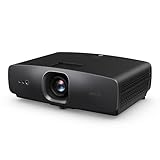
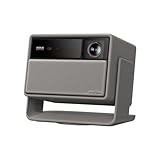


3D support and throw ratios come from ProjectorCentral's spec database. Specs can change between revisions, so check the current listing and manual before buying.
The best 3D projectors, reviewed
1. BenQ W2720i: Best Overall
Who it's for: home-theater fans who want one projector for everything, including 3D discs.
The W2720i is a 4K DLP home-theater model rated at 2,500 ANSI lumens with an LED light source rated for 20,000 hours (30,000 in Eco). ProjectorCentral lists Full HD 3D, and BenQ's listing highlights 95% DCI-P3 color and Android TV. Its throw of 1.0 to 1.3:1 suits smaller rooms, at about 7.3 to 9.4 ft for 100 inches.
Remember that 3D glasses dim the image. At 2,500 lumens in a dark room with a 100 to 110-inch white screen, you'll have the margin you need, but this isn't a projector for 3D with lights on. Lens shift is a modest ±5% vertical, so it needs to sit at close to the right height.
Pros
- Full HD 3D listed, plus strong 2D color
- Short throw suits smaller rooms
- LED source with long rated life
Cons
- Modest brightness for 3D
- Limited lens shift
- DLP rainbow artifacts for sensitive viewers
2. XGIMI Horizon 20: Best Smart Pick
Who it's for: viewers who want 3D without giving up streaming.
The Horizon 20 is rated at 3,200 ISO lumens from an RGB triple laser, and ProjectorCentral lists Full HD 3D support. It also has Google TV, optical zoom and very large lens shift (±120% vertical, ±45% horizontal), so 3D or not, it's easy to install. Throw is 1.2 to 1.5:1, about 8.7 to 10.9 ft for 100 inches.
Check the current XGIMI manual for how 3D is enabled and which glasses the projector supports, since 3D is usually a menu setting rather than something advertised on the box. Dolby Vision and HDR10+ cover the 2D side.
Pros
- Google TV and 3D in one box
- Large lens shift range
- 3,200 ISO lumens
Cons
- Premium price tier
- Glasses sold separately
- Pixel shift, not native 4K
3. Optoma UHZ66: Best Laser Value
Who it's for: people who want brightness left over after the glasses take their share.
At 4,000 ANSI lumens, the UHZ66 has more output than most of this list, which matters more for 3D than for anything else. ProjectorCentral lists Full HD 3D and a 30,000-hour laser. Throw is 1.4 to 2.24:1, or 10.2 to 16.3 ft for 100 inches, and it weighs just 6.6 lb.
There's no lens shift, so plan a mount at the right height. ProjectorCentral's page lists a 1.6x zoom in the spec table and 1.3x in the highlights, so confirm before mounting. If 3D discs are the main reason you're shopping, the extra lumens here are worth more than the convenience features you'd give up.
Pros
- 4,000 ANSI lumens helps offset dim glasses
- 30,000-hour rated laser
- Light and easy to mount
Cons
- No lens shift
- Long throw
- No smart platform listed

Optoma UHZ66 4K Laser Projector
by Optoma
Currently unavailable on Amazon
4. BenQ TK710: Best for Gaming
Who it's for: gamers who also own a stack of 3D Blu-rays.
The TK710 is rated at 3,200 ANSI lumens with a 20,000-hour laser, and lists Full HD 3D. Its gaming numbers are the highlight, at 16.7 ms for 4K at 60Hz and 4.2 ms at 1080p and 240Hz. Throw is 1.15 to 1.5:1 with a 1.3x zoom, or about 8.4 to 10.9 ft for 100 inches.
There's no built-in streaming platform listed, so plan on a stick. Input for a 3D Blu-ray player is simple through HDMI, and eARC handles sound to a soundbar.
Pros
- Excellent 1080p/240Hz input lag
- Laser light source
- Full HD 3D listed
Cons
- No smart platform
- Pixel shift, not native 4K
- Limited lens shift
5. Hisense C2 Pro: Best Portable
Who it's for: people who want to take 3D movie night to a different room.
The C2 Pro is a compact RGB triple laser model rated at 2,600 lumens with a 25,000-hour source and 3D listed by ProjectorCentral. It's good for moving between rooms, with powered zoom from 0.9 to 1.5:1, so a 100-inch picture needs about 6.5 to 10.9 ft.
Brightness is the concern. With glasses on, this is best in a very dark room and a 100-inch picture or smaller. It also lists Dolby Vision and HDR10+ for regular movies, and built-in JBL sound.
Pros
- Portable design with powered zoom
- RGB triple laser
- Built-in sound
Cons
- Dim for large 3D images
- VIDAA platform has fewer apps
- 12.6 lb isn't small for its class

6. Dangbei DBOX02 Pro: Best Mid-Range
Who it's for: buyers who want Google TV and 3D without a premium budget.
Dangbei's DBOX02 Pro is a 4K RGB laser projector running Google TV, listed by ProjectorCentral with Full HD 3D, HDR10+, HDR10 and HLG. ProjectorCentral's spec table rates it at 2,000 ISO lumens, while its highlights cite 2,450, so we use the lower figure, and the listing title also says 2,000.
A fixed 1.27:1 throw means about 9.2 ft for 100 inches, with digital zoom as the only adjustment, so placement isn't flexible. Weigh that against its price tier: the convenience is good, but you'll need to set the projector exactly where the math says.
Pros
- Google TV built in
- RGB laser and 3D listed
- Mid-range price tier
Cons
- Fixed throw, digital zoom only
- Lower brightness for 3D
- Source figures disagree on brightness

7. BenQ TH575i: Best Budget
Who it's for: those who want to try 3D without spending much.
The TH575i is a 1080p DLP lamp projector with 3,800 ANSI lumens and Full HD 3D, plus a licensed Google TV dongle. It's bright for its tier, which is a real advantage with 3D glasses, and at 1080p it actually matches the resolution of 3D Blu-rays. Lamp life is rated at 6,000 hours (10,000 in Eco), and the 1.49 to 1.64:1 throw needs about 10.8 to 11.9 ft for 100 inches.
Pros
- Bright for the price tier
- 1080p matches 3D Blu-ray
- Google TV dongle included
Cons
- Lamp-based
- Long throw
- DLP rainbow artifacts for sensitive viewers

3D glasses and accessories
Most of the DLP projectors in this guide work with DLP Link active shutter glasses, but check your manual before buying. DLP Link glasses sync to a signal in the projected image, so they don't need a separate emitter.
TV glasses and passive cinema glasses won't work with these projectors, and glasses from one brand don't always work with another's. Buy one pair first and confirm it syncs before you order a set.
How to choose a 3D projector
Confirm support before you buy
Current spec sheets are the only reliable source. ProjectorCentral lists 3D support for each of these models, but details such as the sync method or supported 3D formats differ, and some projectors list 3D only for PC signals. Hisense's newer XR10, for instance, shows "PC 3D Ready," while Sony's BRAVIA Projector 7 doesn't list 3D at all.
Expect a dimmer picture
Active shutter glasses block each eye about half the time, so 3D looks noticeably dimmer than 2D. Start with a projector that's bright enough for your screen in 2D with some room to spare. A smaller screen and a matte white surface help. Avoid grey and ALR screens for 3D unless your projector is very bright.
Plan your source
Most streaming services have dropped 3D, so the practical source is a 3D Blu-ray player or a PC. Check that your receiver or soundbar passes 3D signals through HDMI if it sits between the player and projector.
Size for 3D
Bigger 3D is better, but only if the image stays bright. Use our screen size calculator and be conservative: 100 inches is a safer target than 150 for most 3D projectors. Run the distance through our throw ratio calculator to confirm placement.
Screen choice
A smooth, matte white screen like the options in our fixed frame projector screen guide is the right match for active-shutter 3D. Silver screens are for polarized systems and aren't needed here.
Laser or lamp
Lasers need no replacement bulb and suit heavy use, as our laser projector guide explains. If you'll only watch 3D occasionally, a lamp model is a fair, cheaper choice.
Common 3D mistakes
- Buying glasses before checking the type. DLP Link and RF glasses aren't interchangeable.
- Assuming 4K HDR and 3D work together. 3D Blu-rays are a 1080p format, so you won't get HDR 4K in 3D.
- Using a dark screen. You'll compound the light lost through the glasses.
- Forgetting the receiver. An older AV receiver can block a 3D signal. Run a test.
- Sitting too far off-axis. Glasses and screens both perform best when you sit near the center.
How we chose
We didn't test these projectors ourselves. We started from ProjectorCentral's spec database, kept models shown as current and listed with Full HD 3D, and compared them on brightness, throw and light source using maker listings and retailer specs. Glasses compatibility varies, so we point you to your projector's manual.
FAQ
Do new projectors still support 3D?
Some do. 3D TVs have disappeared, but a number of current projectors still list Full HD 3D, including the BenQ W2720i, BenQ TK710, Optoma UHZ66, XGIMI Horizon 20 and Hisense C2 Pro. Support varies by model, so always confirm 3D on the current spec sheet before buying.
What glasses do I need for a 3D projector?
Most current home projectors use active shutter glasses. DLP models typically use DLP Link glasses that sync to the picture, while some models use RF glasses. Confirm which type your projector supports, because the wrong glasses won't work. Glasses for TVs often won't work with projectors either.
How do you watch 3D movies on a projector?
You need a 3D-capable projector, compatible glasses and a 3D source, such as a 3D Blu-ray player or a PC with 3D content. Most streaming services dropped 3D, so physical discs are the main source. Enable 3D in the projector's menu if it doesn't switch automatically.
Is 3D dimmer on a projector?
Yes. Active shutter glasses block light from each eye part of the time, so the picture looks noticeably dimmer than 2D. Choose a brighter projector than you'd pick for 2D, use a matte white screen, and darken the room.
Do I need a special screen for 3D?
For active shutter glasses, a regular white screen works fine, and no silver screen is needed. Silver screens are for polarized 3D systems, typically used in commercial cinemas. Brighter matte white surfaces help offset the light lost through the glasses.
Verdict
The BenQ W2720i is the best 3D projector for most home theaters thanks to its 4K home-theater picture and Full HD 3D support. The XGIMI Horizon 20 is the pick if you want Google TV and placement flexibility, the Optoma UHZ66 if brightness matters most, and the BenQ TH575i if you want to try 3D on a budget. Whichever you pick, buy one pair of glasses and confirm they sync before you order more.